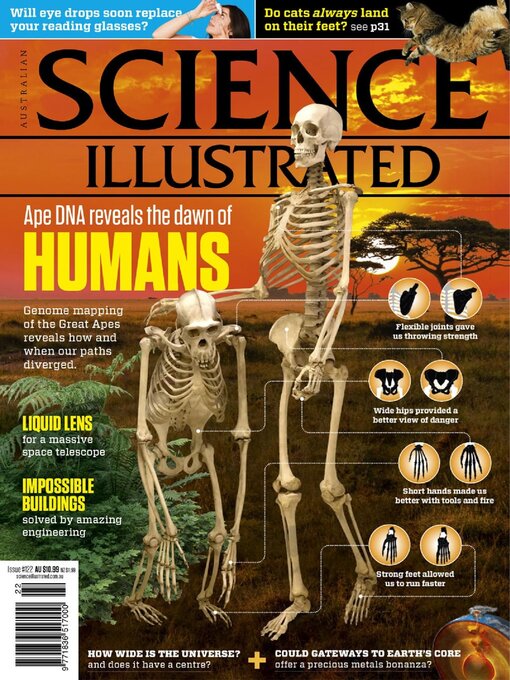
 Issue 122
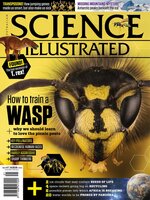 Issue 121
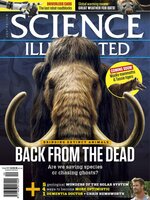 Issue 120
 Issue 119
 Issue 118
 Issue 117
 Issue 116
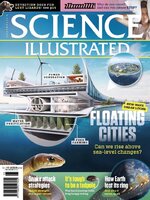 Issue 115
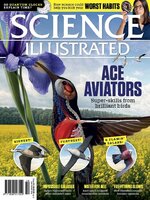 Issue 114
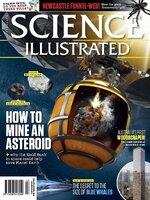 Issue 113
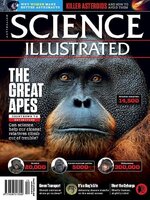 Issue 112
 Issue 111
 Issue 110
 Issue 109
 Issue 108
 Issue 107
 Issue 106
 Issue 105
 Issue 104
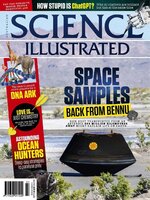 Issue 103
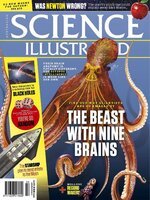 Issue 102
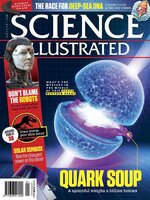 Issue 101
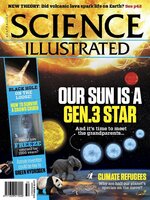 Issue 100
 Issue 99
Science Illustrated delivers natural science, break through discoveries and an understanding of the world for the entire family. Packed with stunning photography and in-depth editorial it’s a visually spectacular gateway to the world looking into the beginning of life to distant objects in the universe.
SUBSCRIBE & START SAVING NOW!
Science Illustrated
MEGAPIXEL
Supernova reveals star interior • A star exploded billions of years ago, billions of light years away. Its final light has reached Earth, and is now providing a rare glimpse into the heavy elements in its core.
Colossal makes key steps towards dodos • US biotech company Colossal Biosciences has taken its next steps towards bringing the dodo back to life.
Could eye drops replace glasses? • Millions of people use reading glasses, but in the future, eye drops might be able to cure presbyopia.
Planet birth ‘caught in the act’ • A photo from Chile’s Very Large Telescope has revealed a new planet still in the process of sucking up gas and dust.
Mapping the movements of octopus arms • Researchers filmed 25 species of octopus in the wild on the seafloor, to learn how they control their arms.
Aussie web designer is top spinner • An Australian spider species has a unique approach to web engineering which bypasses the usual trade-off between strength and elasticity.
Vast cloud spotted in Milky Way ‘dust lanes’ • A giant cloud has been spotted within our own galaxy, revealing a turbulent environment that could help researchers understand how stars form.
Camera captures intimate moment between jaguars • “if they’d moved a few metres we would have missed everything!” A well-placed camera trap observes behaviour that may be helpful in jaguar breeding efforts.
Cutting down on coffee? Caffeine withdrawal may cause crazy dreams • It is known that caffeine can make it harder to fall asleep, but now it turns out that your dreams become more vivid if you cut down on coffee.
Northerlies, not westerlies, are melting Antarctica’s ice • Simulations of the ocean and ice around Antarctica have revealed an unexpected factor accelerating the melting of the world’s largest ice sheet.
How wide is the universe? • “The universe is 13.8 billion years old, but I read that it is wider than 13.8 billion light-years. Is this true, and how can we see so far away, when the speed of light is the limit?”
Why does metal feel colder than wood when it must be the same temperature? • “If I sit on a metal bench in winter, it feels colder than a wood bench. And in summer heat, it feel hotter. But they’re the same temperature, right?”
TEST YOURSELF
Why do turbines have 3 blades? • Is there a technical explanation for why most modern wind turbines have 3 blades?
Is it dangerous to swallow toothpaste?
How old can a crocodile grow? • The longest-lived reptile known was a giant tortoise thought to have reached 255 years old. But what about crocodiles?
Why is the idea of fire in space so scary? • “I heard that fire behaves differently in space, making it more difficult to extinguish. Is that true, and why?”
Is cola good for an upset stomach?
…all mountains disappeared? • “It’s common on weather maps to see very different weather on different sides of a significant mountain range. What would happen to the climate if mountains weren’t there?”
How do they lay cables on the deep ocean bed? • “Do they put undersea cables just lying on the seabed? Do they often get snapped or damaged by bottom trawlers – or by undersea earthquakes?”
Are we getting ‘old’ more slowly? • In photos from the 1980s, middle-aged individuals appear older than middle-aged people do today. Did people age more quickly back then?
What...